
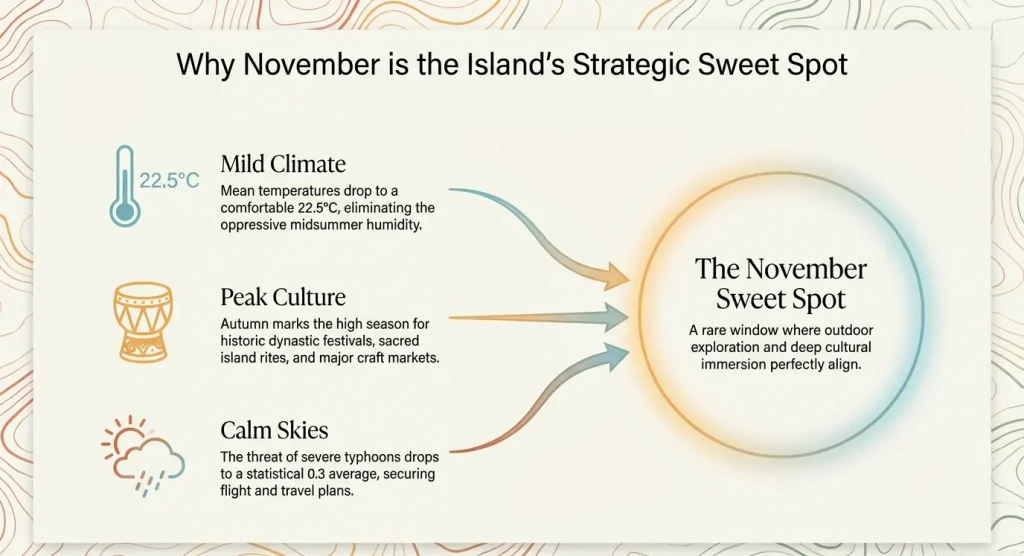
Hello! I am part of the blogging team here at Smile Resort Rent-a-Car. As the autumn breeze sets in, many travelers start looking ahead to an island getaway in Okinawa. November is truly a sweet spot for travel: the intense summer heat finally eases into comfortable, breezy days, while traditional festivals and cultural showcases bring the islands to life. That said, when planning around major autumn events—such as the historic reopening of Shuri Castle, local pottery markets, or road closures during cycle races—it is easy to wonder how to build the smoothest route. Questions about weather, appropriate clothing, whether the water is warm enough for a swim, and what seasonal foods to look out for come up all the time. To help you make the most of your road trip, here is a practical overview of November highlights, climate trends, and local driving considerations.
- Key celebrations and ticketing details for the restored Shuri Castle Main Hall
- Craft markets, island fairs, and tropical evening illumination spots
- November temperatures, packing tips, and the truth about autumn water activities
- Traffic detours to watch for, alongside practical four-day road trip itineraries
Major November Events in Okinawa and the Reopening of Shuri Castle
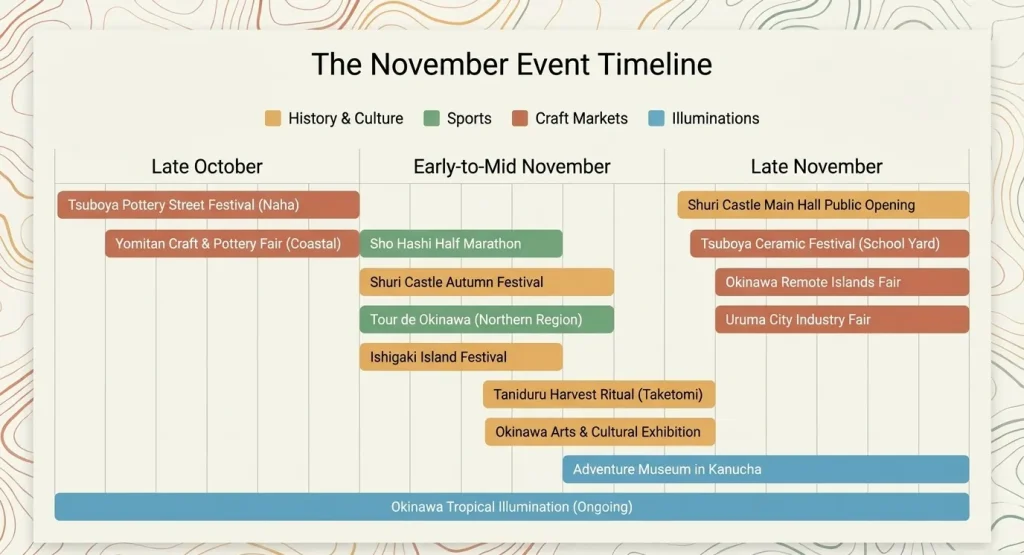
With pleasant autumn temperatures settling over the prefecture, November brings a blend of historic milestones and authentic local festivals. From commemorative celebrations at Shuri Castle to craft markets in quiet pottery villages, exploring these cornerstone events is a fantastic way to experience Okinawa’s rich heritage firsthand.
| Timing | Event Name | Location | Overview & Practical Notes |
|---|---|---|---|
| Late Oct to Early Nov | Tsuboya Pottery Street Festival | Naha City | A bustling ceramic market along historical stone paths, offering studio discounts, hands-on pottery wheels, and energetic local flag performances. |
| Late Oct to Early Nov | Yomitan Craft & Pottery Fair | Yomitan Village | Set right along the coastline, this outdoor fair gathers ceramic artists and Ryukyu glassblowers from all over the island in a scenic oceanfront setting. |
| Early Nov | Sho Hashi Half Marathon | Nanjo City | A scenic community run known for its steep initial hill climb followed by panoramic Pacific Ocean vistas from the elevated Niraikanai Bridge. |
| Early Nov | Shuri Castle Autumn Festival | Naha City | A grand cultural celebration featuring historic reenactment processions down Kokusai Dori and traditional royal ceremonies within castle grounds. |
| Early Nov to Mid-Feb | Adventure Museum in Kanucha | Nago City | An interactive nighttime experience blending tropical resort landscapes with projection mapping, ambient soundscapes, and art installations. |
| Mid-Nov | Taniduru Harvest Ritual | Taketomi Island | A sacred agricultural rite designated as an Important Intangible Folk Cultural Property, highlighted by traditional plays and dances at the local shrine. |
| Early Nov | Ishigaki Island Festival | Ishigaki City | A spirited island-wide celebration filled with community parades, Eisa dance performances, regional food stalls, and evening fireworks over the bay. |
| Early Nov | Tour de Okinawa | Nago City & Northern Region | One of Japan’s premier road cycling races winding through the forested coastal highways of Yanbaru, accompanied by extensive rolling road closures. |
| Mid-Nov | Okinawa Arts & Cultural Exhibition | Okinawa City | A juried showcase of fine arts, calligraphy, and photography highlighting contemporary creative talent from across the Ryukyu archipelago. |
| Late Nov | Tsuboya Ceramic Festival | Naha City | Held at an elementary school yard, featuring dozens of kilns, competitive wheel-throwing matches between veteran artisans, and lively ceramic auctions. |
| Late Nov | Shuri Castle Main Hall Public Opening | Naha City | The long-awaited official public opening of the reconstructed main palace, showcasing revived Ryukyu joinery, stonework, and lacquer craftsmanship. |
| Late Nov | Okinawa Remote Islands Fair | Naha City | A large-scale market in Naha gathering specialty foods, vintage awamori, and live folk music from inhabited outlying islands across the prefecture. |
| Late Nov | Uruma City Industry Fair | Uruma City | A family-friendly festival highlighting local agriculture, seafood, and artisanal goods from a region famous for its traditional bullfighting heritage. |
| Autumn to Late May | Okinawa Tropical Illumination | Okinawa City | An award-winning garden light show that highlights natural palm groves and lush botanicals with millions of warm, hand-placed LED lights. |
Reopening of the Restored Shuri Castle and Ticketing
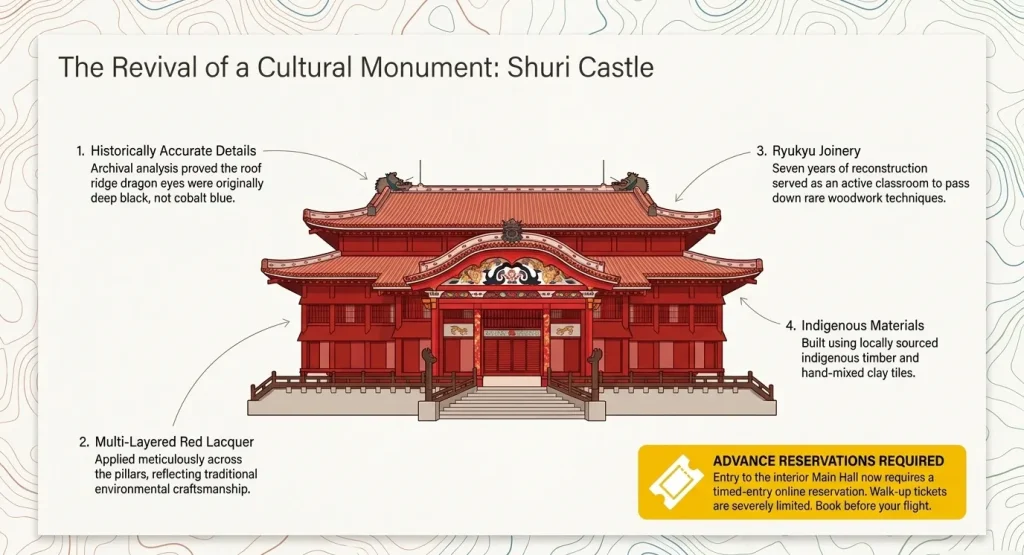
One of the most meaningful developments on the island is the completion and reopening of the Shuri Castle Main Hall (Seiden). Following the tragic 2019 fire, national reconstruction efforts spent roughly seven years meticulously reviving this cultural monument. Rather than simply rebuilding a replica, this ambitious undertaking served as an active preservation classroom, passing down rare Ryukyu joinery, stone-carving, traditional plasterwork, and lacquer techniques to a younger generation of craftspeople.
Historical photographs from the late 19th and early 20th centuries were digitally analyzed at ultra-high resolution to ensure authentic proportions and pigments. A notable example is the eyes of the dragon ornaments on the roof ridge: while modern restorations had painted them cobalt blue, archival research proved they were originally rendered in deep black, a detail faithfully restored today. Indigenous Okinawan timber, hand-mixed clay tiles, and multi-layered red lacquer applied across the pillars all reflect traditional environmental craftsmanship.
Visitor Advisory: Advance Reservations
To protect delicate cultural property and manage high visitor volumes, entry to the interior of the restored Main Hall requires a timed-entry reservation online. Admissions policies and ticket pricing have been updated alongside the opening. Walk-up tickets may be severely limited or unavailable during peak dates, so reserving your entry slot online well ahead of your flight is strongly advised.
Because reservation procedures, open hours, and entry guidelines can shift based on crowd conditions, please verify the latest operational details directly on the official Shuri Castle Park website before heading out.
Shuri Castle Autumn Festival and the Historic Royal Parade
Serving as a celebration of royal heritage, the Shuri Castle Autumn Festival stands out as an early November highlight. Centered around early-month holidays, this vibrant celebration brings the court rituals of the Ryukyu Kingdom into the heart of modern Naha.
The centerpiece of the festivities is the grand Ryukyu Dynastic Procession along Kokusai Dori. Roughly 700 participants dressed in traditional court attire—including figures portraying the King, the Queen, Chinese envoys, and traditional dancers—parade along the avenue to the sounds of classical court instruments. It feels like watching living history unfold right on the street.
Traffic Alert: Kokusai Dori Street Closures
During the grand parade, Kokusai Dori is completely closed to regular vehicular traffic from midday through mid-afternoon. Surrounding streets experience heavy congestion. Driving a rental car into central Naha during this window is not recommended; using the Yui Rail monorail provides a far more predictable transit option.
Later in the festival schedule, sacred reenactment rituals such as the King and Queen’s appearance at Hoshinmon Gate and ancient pilgrimage processions wind through the neighborhood surrounding the castle. Traffic restrictions also apply around Ryutan Road in the Shuri district on parade days, making it worthwhile to review local road notices before venturing over.
Tsuboya and Yomitan Pottery Markets
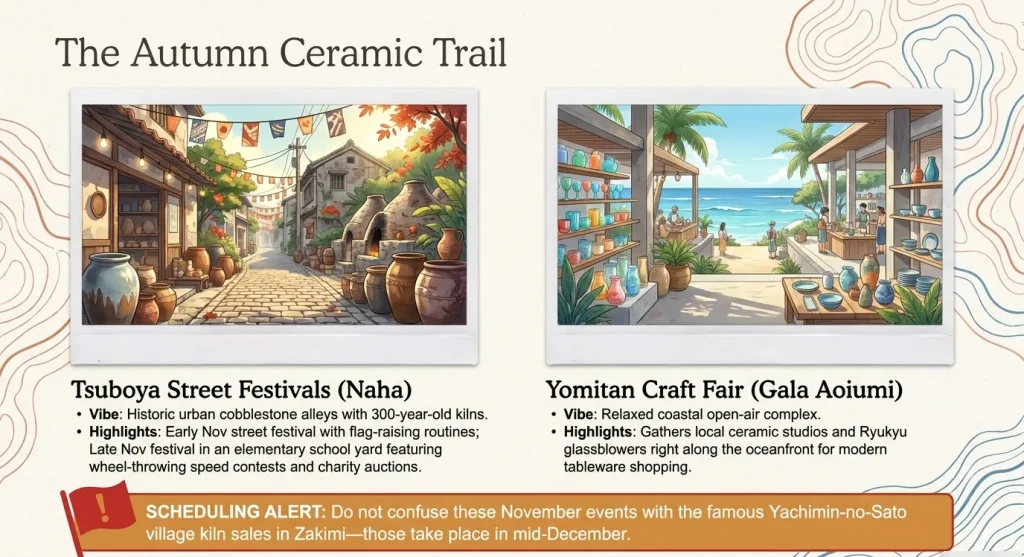
For collectors and interior design enthusiasts, autumn is the premier time to discover Okinawan ceramics, locally known as yachumun. Two major pottery events take place right around late October and early November, drawing visitors eager to pick up unique handcrafted pieces.
In Naha, the Tsuboya Pottery Street Festival takes place in the historic quarter where kilns have operated for more than three centuries. Local workshops, galleries, and retail shops set up sidewalk stalls offering attractive event discounts. Walking through the narrow cobblestone alleys lets you meet artisans directly, try your hand at an electric potter’s wheel, or watch neighborhood youth perform traditional flag-raising routines.
Meanwhile, in Yomitan Village along the central-western coast, the Yomitan Craft & Pottery Fair is hosted at the seaside Gala Aoiumi complex. This open-air venue brings together local ceramic studios along with Ryukyu glass workshops from across the island. The coastal setting makes for a relaxed afternoon browsing contemporary tableware and colorful glassware suited for modern living.
Late November brings another signature pottery gathering: the Tsuboya Ceramic Festival, held on the grounds of Tsuboya Elementary School. Featuring around 30 kilns under communal tents, the festival features entertaining wheel-throwing speed contests (kami-subu) and charity auctions featuring one-of-a-kind art pieces.
Helpful Note on Ceramic Market Dates
Travelers sometimes confuse these November gatherings with the famous Yachimin-no-Sato pottery fairs in Zakimi, Yomitan. Those particular village kiln sales take place in mid-December rather than November, so double-check your event locations when drafting your itinerary.
Tour de Okinawa and Northern Road Closures
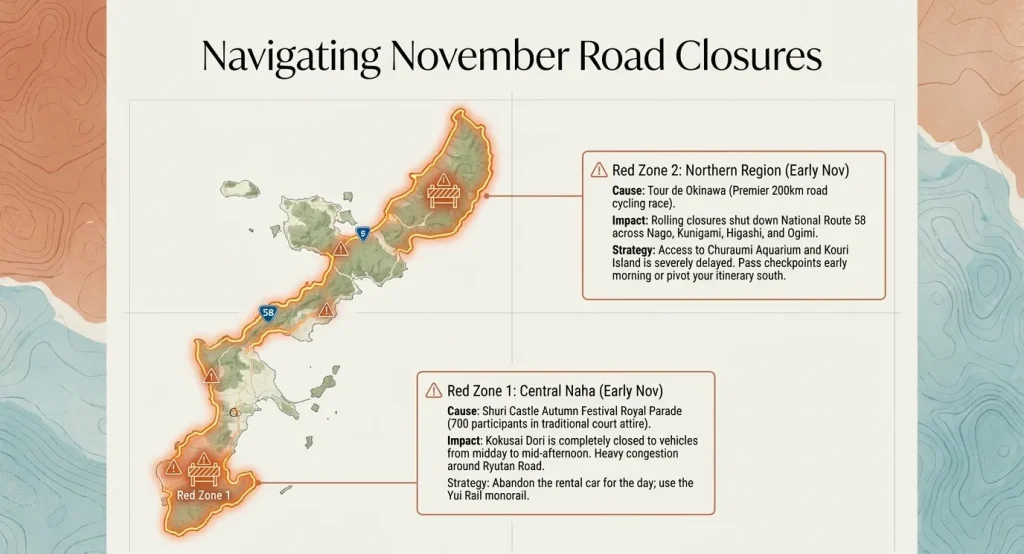
Cooler autumn breezes also set the stage for world-class endurance sports. In early November, northern Okinawa hosts Tour de Okinawa, one of Japan’s most demanding road cycling events.
Starting and finishing near the 21st Century Forest Gymnasium in Nago, the race routes wind through the coastal cliffs and mountain passes of the UNESCO World Heritage-listed Yanbaru forest. Professional riders and amateur cycling enthusiasts tackle grueling distances of up to 200 kilometers. On main race day, rolling closures shut down National Route 58 and connecting prefectural roads from early morning well into the afternoon across Nago, Kunigami, Higashi, and Ogimi.
Driving Advisory for Northern Road Trips
These closures heavily disrupt transit toward popular northern destinations, including the Okinawa Churaumi Aquarium, Bise Fukugi Tree Path, and Kouri Island. Drivers caught unprepared can face major delays or forced detours through remote mountain bypasses.
If you plan to explore the northern tip around this race date, check the published closure timetable in advance. Passing through key checkpoints before early morning closures take effect—or shifting your travel focus south toward Naha and Nanjo for the day—is the best strategy to keep your trip running smoothly.
Taketomi Taniduru and Ishigaki Island Festivals
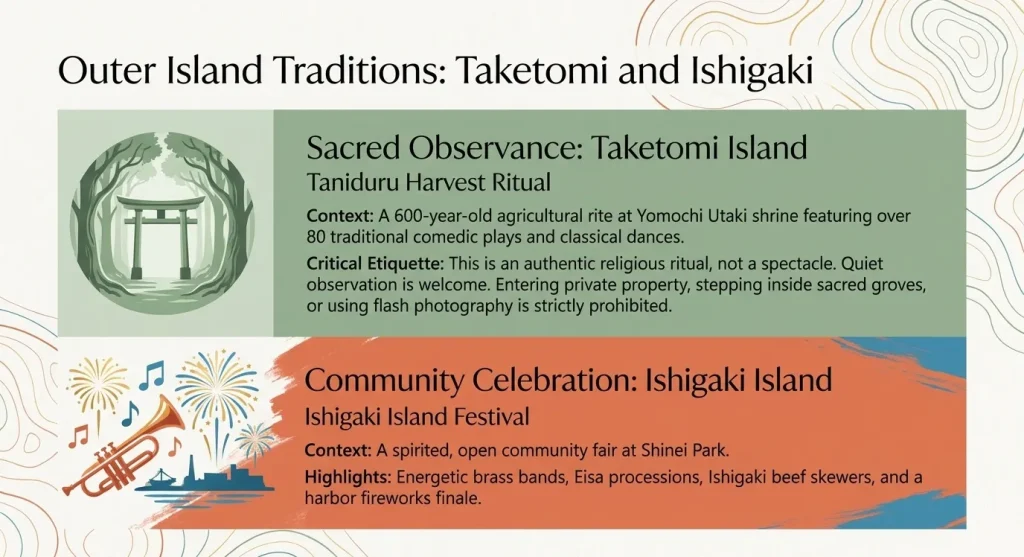
Heading beyond the main island to the Yaeyama Islands in November opens up opportunities to witness deep-rooted island traditions and cheerful community celebrations.
On Taketomi Island, the annual Taniduru (Seed-Sowing Festival) is celebrated across a ten-day period. Recognized as a national Important Intangible Folk Cultural Property with roughly six centuries of history, this agricultural ritual prays for fruitful crops, community health, and prosperity. The emotional heart of the festival occurs mid-schedule over two days at the Yomochi Utaki shrine, where over 80 traditional comedic plays (kyogen), classical dance pieces, and musical narratives are performed on a dedicated stage from morning into the night.
Cultural Etiquette at Sacred Village Rites
Taniduru is an authentic religious ritual for the local community, not an entertainment spectacle. Visitors are welcome to observe quietly from designated viewing areas, but entering private residential properties, stepping inside sacred grove boundaries (utaki), or using disruptive flash photography is strictly prohibited.
Over on neighboring Ishigaki Island, the Ishigaki Island Festival takes over Shinei Park during early November. This wide-open community fair features energetic brass bands, traditional Eisa processions, and food booths serving Ishigaki beef skewers and tropical fruit drinks. Sunday concludes with live performances by regional musicians and a fireworks display reflecting across the harbor.
Remote Islands Fair and Winter Illuminations
As November winds down, regional trade exhibitions and winter illumination displays make their seasonal debut, offering great food and scenic evening strolls.
The Okinawa Remote Islands Fair, held at Okinawa Cellular Park in Naha near the end of the month, brings the culture of inhabited outlying islands together under one roof. Small-batch sea salts, rare island awamori vintages, woven textiles, and tropical fruit jams that rarely make it to regular supermarket shelves are available directly from island producers. Outdoor food stalls serve up regional noodle bowls and grilled specialties alongside live folk performances, making it an easy way to experience the whole archipelago in a single afternoon.
When the sun sets earlier in the evening, festive lights begin to transform the tropical landscape. The Southeast Botanical Gardens in Okinawa City presents the Okinawa Tropical Illumination, a display frequently recognized in national night-viewing awards. Rather than wrapping alpine evergreens, the light displays drape over towering royal palms, ancient banyan trees, and floating lotus ponds with millions of gentle, colorful LEDs.
Up north in Nago, Kanucha Resort unveils its reimagined nighttime attraction, Adventure Museum in Kanucha. Blending the resort’s lush coastal surroundings with digital projections, creative soundscapes, and illuminated pathways, it provides a relaxing evening stop on a northern road trip.
Essential Travel Knowledge for Your Autumn Okinawa Trip
Getting the most out of your autumn journey means knowing how to pack for changing weather, understanding ocean safety outside the summer window, and discovering what local foods are at their peak. Here is what to keep in mind when preparing for your drive around the island.
November Climate, Temperature, and Packing Tips
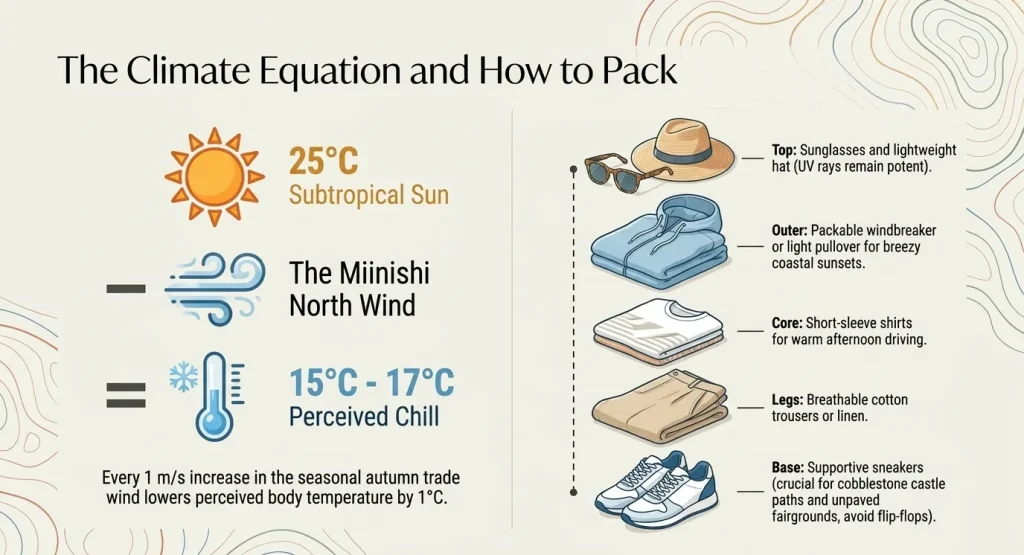
While northern regions of Japan pull out heavy coats by November, Okinawa maintains a mild subtropical warmth. Reviewing standard meteorological benchmarks helps set expectations for your packing list.
| Weather Metric (Naha) | Typical Average Values | Practical Travel Advice |
|---|---|---|
| Mean Monthly Temperature | Approx. 22.5°C to 23.0°C | Feels similar to early autumn on the mainland; comfortable for outdoor walking without heavy heating or cooling. |
| Average Daily High | Approx. 25.0°C to 25.5°C | Clear afternoons regularly feel pleasantly warm, and you may find yourself working up a light sweat when walking uphill. |
| Average Daily Low | Approx. 19.5°C to 20.4°C | Evenings and early mornings frequently dip below 20°C, feeling noticeably cooler when coastal winds pick up. |
| Monthly Precipitation | Approx. 110 mm to 120 mm | Significantly drier than the rainy monsoon in June or the typhoon-heavy summer months. |
| Typhoon Approaches | Approx. 0.3 on average | The statistical likelihood of severe flight cancellations due to tropical storms is substantially lower than in midsummer. |
| Prevailing Wind Direction | North to Northeast (Miinishi) | The seasonal autumn trade wind. Each 1 m/s increase in wind velocity can lower perceived body temperature by around 1°C. |
※ The figures above reflect historical averages published by the Japan Meteorological Agency and should be treated as general guidelines. Weather patterns can vary year to year, so reviewing real-time forecasts right before traveling is recommended.
During the day, short-sleeve shirts, breathable linen blouses, and cotton trousers are completely appropriate for driving and casual sightseeing. However, subtropical UV rays remain surprisingly potent even in the fall, so bringing sunglasses, sunscreen, and a lightweight hat is still a wise move.
Layering Against Seasonal Winds
The biggest factor in November comfort is the northern wind known locally as Miinishi. Along exposed headlands or during evening light walks, brisk ocean winds can cause the perceived temperature to feel like 15°C to 17°C. Packing an easily stowable windbreaker, light jacket, or pullover in your daypack ensures you stay comfortable from sunny daytime drives to breezy coastal sunsets.
For walking, supportive sneakers are far better suited than flip-flops. Cobblestone paths at castle sites, hillside viewpoints, and unpaved fairgrounds are much easier to navigate on foot with stable footwear.
Can You Still Swim? Ocean Conditions and Water Temperature
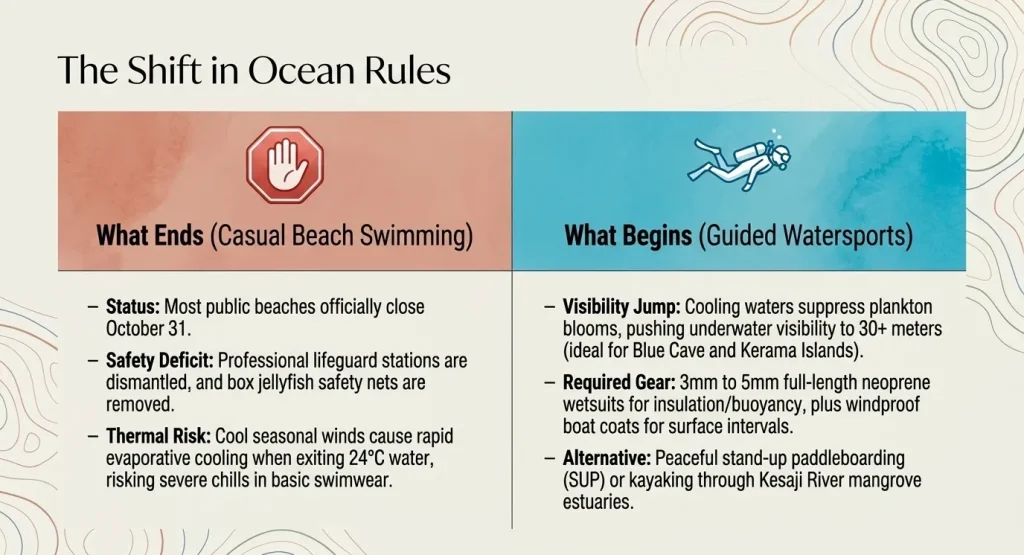
A frequent question from first-time autumn travelers is whether swimming at the beach is still realistic in November. In practical terms, casual swimming in standard swimwear is not recommended.
Water temperatures around the main island hover between 24°C and 25°C, which feels tolerable initially. The challenge arises the moment you step out of the water: the cool seasonal wind quickly pulls moisture away, causing rapid evaporative cooling. This sudden drop in body temperature leaves you shivering quickly, increasing the risk of catching a chill.
Public Beach Closures and Lifeguard Availability
With few exceptions at private luxury resorts, most public beaches officially end their swimming season on October 31. Beyond this date, professional lifeguard stations are dismantled and safety netting (such as box jellyfish barriers) is removed. Venturing unsupervised into unmonitored waters in basic swimwear presents genuine safety concerns and should be avoided.
Autumn Snorkeling and Guided Water Sports
While traditional beach swimming winds down, November marks the start of prime season for guided snorkeling and scuba diving with proper thermal gear.
As coastal water temperatures cool slightly, marine plankton blooms subside, causing underwater visibility to jump up to 30 meters or more. Famous marine locations like the Blue Cave in Cape Maeda or the Kerama Islands experience far fewer tour boats than in midsummer, giving you plenty of elbow room to observe healthy coral formations and tropical reef fish without crowded conditions.
Recommended Gear for Fall Watersports
Joining an organized tour with a professional operator who supplies a 3 mm to 5 mm full-length neoprene wetsuit is the safest and most comfortable approach. The suit provides insulation and reliable buoyancy. Wearing a windproof boat coat during surface intervals keeps chilly ocean spray at bay, ensuring an enjoyable experience from start to finish.
Pleasant daytime temperatures also make autumn ideal for paddling adventures. Guided stand-up paddleboarding (SUP) or kayak outings through the quiet mangrove estuaries of the Hija River or Kesaji River offer a peaceful way to experience subtropical ecosystems without the intense heat of summer.
Seasonal Culinary Highlights: Tiger Prawns and Awamori

Mild weather also brings an abundance of seasonal food and drink. Exploring local markets and roadside stations in autumn reveals regional specialties at their peak flavor.
In seafood, Japanese tiger prawns (kuruma ebi) take center stage. Okinawa consistently ranks as one of Japan’s leading producers of farmed tiger prawns, nurtured in pristine offshore waters around Kume Island, Ginoza Village, and Yagaji Island. Harvesting picks up momentum in November, when restaurants and specialty seafood shacks serve them as sweet, firm sashimi, charcoal-grilled with coarse sea salt, or fried as crisp tempura where you can enjoy the flavorful heads whole.
November 1 is officially recognized locally as Awamori Day. Marking the onset of cooler weather, this date kicks off the prime seasonal distillation cycle across more than forty active distilleries on the islands. It is a fantastic time of year to sample aromatic young distillations alongside carefully aged vintage pots (kusu) at traditional izakayas.
Agricultural Regulations: Fresh Beni-Imo Restrictions
Autumn brings the harvest of vibrant purple sweet potatoes (beni-imo), prized for their mellow sweetness in tarts and tempura. However, under national plant quarantine laws, taking raw, unprocessed sweet potatoes outside of Okinawa Prefecture is strictly prohibited to prevent the spread of invasive agricultural pests like the sweet potato weevil. Be sure to purchase processed treats, vacuum-sealed baked snacks, or frozen goods when picking up souvenirs for home.
Other autumn specialties include sea grapes (umi-budo), which develop crisp, popping texture in mild waters; handama, an antioxidant-rich purple leafy vegetable; and locally grown island pumpkins with dense, rich sweetness. Stopping by local farmers’ markets during your drives is an easy way to taste authentic regional agriculture.
Sample 4-Day Road Trip Itineraries for November
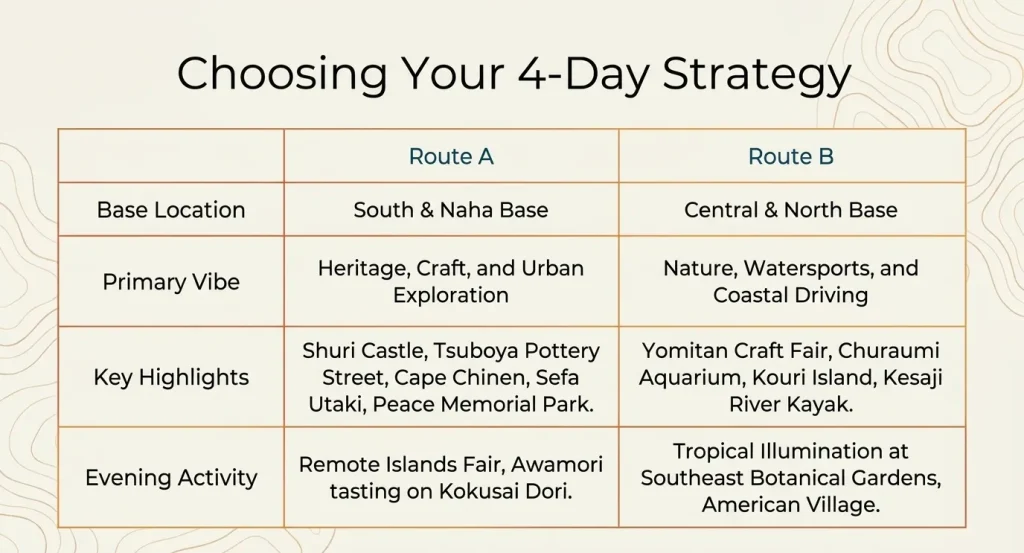
To help balance festival sightseeing, scenic drives, and traffic considerations, here are two realistic four-day sample itineraries structured around different home bases.
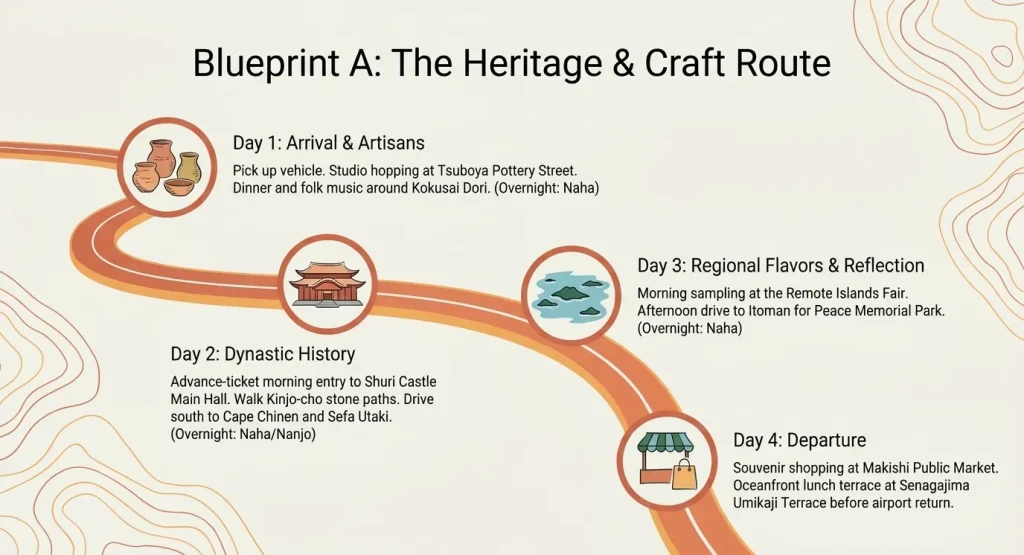
Heritage and Craft Route
Nature and Illuminations Route
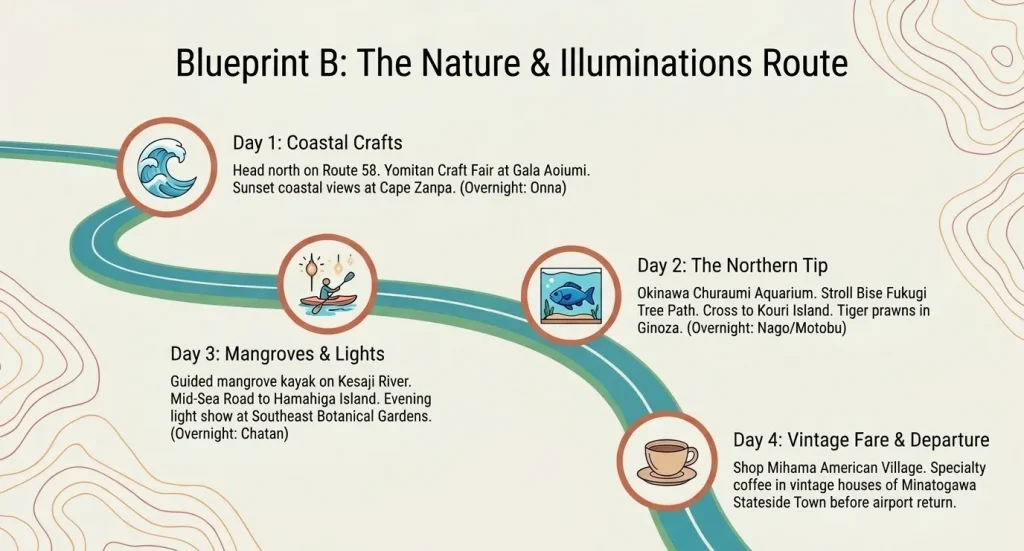
| Day | Heritage & Craft Route (South & Naha Base) | Nature & Illuminations Route (Central & North Base) |
|---|---|---|
| Day 1 | Pick up your rental car near Naha Airport. Head straight to Tsuboya Pottery Street for studio hopping and craft browsing. Enjoy dinner and local folk music around Kokusai Dori (Stay in Naha). | Collect your rental car and head north along Route 58 to Yomitan. Check out the craft fair at Gala Aoiumi, take in coastal views at Cape Zanpa, and check in to a seaside resort (Stay in Onna). |
| Day 2 | Visit Shuri Castle Park with advance-booked morning entry to view the restored Main Hall. Walk the Kinjo-cho stone paths, then drive south to Cape Chinen and Sefa Utaki (Stay in Naha/Nanjo). | Drive up to Okinawa Churaumi Aquarium and stroll through Bise Fukugi Tree Path. Cross the scenic bridge to Kouri Island and enjoy fresh grilled tiger prawns in Ginoza (Stay in Nago/Motobu). |
| Day 3 | Spend the morning sampling regional snacks and island awamori at the Remote Islands Fair. Drive down to Itoman in the afternoon to visit Peace Memorial Park (Stay in Naha). | Join a guided mangrove kayak tour on the Kesaji River. Drive across the Mid-Sea Road to Hamahiga Island, and finish the evening enjoying the light show at Southeast Botanical Gardens (Stay in Chatan). |
| Day 4 | Pick up dried goods and souvenirs at Makishi Public Market. Savor an oceanfront lunch terrace on Senagajima Umikaji Terrace before returning your vehicle (Depart via Naha Airport). | Explore Mihama American Village for shopping, stop for specialty coffee in the vintage houses of Minatogawa Stateside Town, and return your vehicle (Depart via Naha Airport). |
Hitting the Road

With so many cultural milestones and outdoor events taking place in November, flights, hotel rooms, and popular attractions can book up fast. Mapping out your driving routes early ensures a relaxing, memorable island experience filled with history, great food, and stunning coastal views.
If you are looking for a reliable rental car in Okinawa, we would be delighted to welcome you at Smile Resort Rent-a-Car. We offer a convenient shared airport shuttle service between Naha Airport and our branch to get your journey started smoothly. Please note that we do not offer ETC toll card rentals, so if you plan to use the electronic toll gates on the Okinawa Expressway, kindly remember to bring your own valid card. We look forward to helping you enjoy a comfortable, worry-free drive across the islands!